Showing posts with label butterflies. Show all posts
August 21, 2019 0 comments By: m

Lazy, hazy, crazy (and darned hot) days of summer


Other than the cucumbers and onions have all been harvested for the year, there's nothing much to write about, so here's another photo dump post.

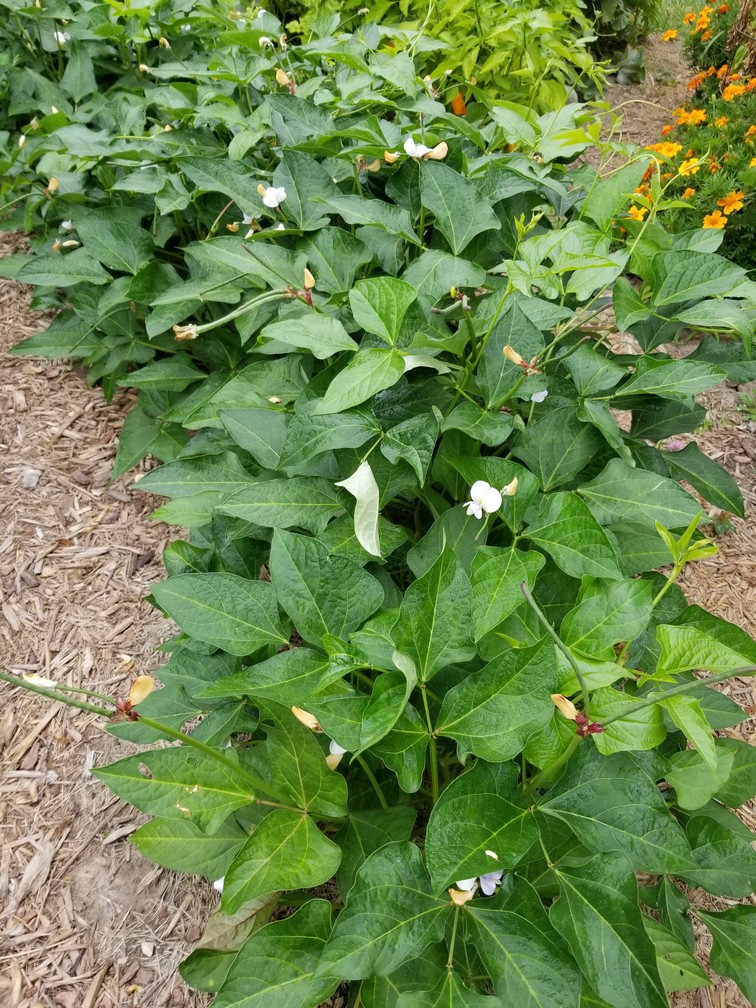
The black-eyed peas (cowpeas) are nearing harvest time.  These are the purple hull variety.  You'll see why they're called that when you get to the third picture, but you can probably already guess.


Last time I wrote about the canteloupes, there was some powdery mildew on the shady side of a couple of plants that I was going to keep an eye on.   I kept an eye on it, but I didn't do anything about it, so this is what the plants look like now:


It didn't seem like there was any good reason to spray something on them since they're pretty much done producing anyway.  I did get some delicious melons...


...but for every one I got, the critters got two.  Fortunately, I planted a lot of them.


A little Missouri primrose volunteer showed up when I pulled the dying Mexican sunflowers.  There hadn't been any planted there before, so its seed made its way from elsewhere by bird or by beast.


Something I ran across recently that I'll share:  You may recall I've described how to tell a Viceroy from a Monarch butterfly by the black stripe through the lower wings of a Viceroy. 

Viceroy butterfly

Recently I came across a photo showing the difference between a male and a female Monarch on a site called ButterflyLady.com.  This might be a little trickier to see out in your garden.  To spot the spot, so to speak.


The japanese beetles have dropped off to just a few now and then, and that combined with bagging the rose blossoms when the buds start to open with little organza drawstring sacks, I've been able to at least get some nice bouquets.

'Pat Austin' (salmon orange), 'Grande Amore' (red) and 'Domina' (white) roses

Daylilies, 'Yellow torch' Mexican sunflowers, orange 'Queen Lime' zinnias, 'Snowdrift' marigolds,
'Audray' white and 'Strawberry Fields' red gomphrena (globe amaranth), and 'Dark Desire' roses

 'Neptune' (lilac hybrid tea), 'Poseidon' (lilac grandiflora), and 'Dark Desire' (dark red hybrid tea) roses,
'Carmine' gomphrena, 'Cora deep lavender' annual vinca

Keep your cool.

Till next time.
June 14, 2019 0 comments By: m

This and That

From time to time, I end up with pictures that didn't fit in the latest posts and will probably be outdated by the time I publish another.  That's happening now, so this post is really to just empty my photo gallery.

Some of the wildflowers are now starting to blossom, but the Queen Anne's Lace (wild carrot - Daucus carota) has been blooming for about two weeks.  Some have a black dot in their centers - actually just off center - which at first I always think is an insect, but it's actually a separate flower (that's probably better described as dark purple).  I haven't found much inforation about them, but according to several sites, those single dark flowers are infertile.  

The plant was named after England's Queen Anne (which one seems to be a point of disagreement), "an expert lace maker," and there is a legend that says she pricked her finger with a needle, whereupon a single drop of blood fell onto the lace she was making; thus the dark purple floret.   Sweet, but why the heck is it really there?


Queen Annes are lovely, but each of the little white flowers,  unlike the single dark one, IS fertile, and they self-seed at amazing rates.  The Carrot Museum website says: " Each compound umbel consists of 20-90 umbellets, and each umbellet has 15-60 flowers."  (Umbel is the type of form the flower takes - kind of like an umbrella.) That's a lot of seed.  This may be great from the flower's point of view, but from mine, it's definitely a drawback.  They invade every corner of the garden.  The seeds have bajillions of little hairs that make them stick to your clothing if you so much as breathe in their direction, so if you wander into a patch when they're producing seed, you'll be picking the little buggers off you one by one.  I find myself pulling scores of Queen Anne's lace by the roots every year, trying to get them out before they go to seed.  Don't worry, I couldn't possibly get them all.

The Carrot Museum says no one knows what that little dark flower is for.  But I rather like the idea presented by some botanists that it's there to trick other insects into thinking there's another insect feeding on the plant, so it must be desirable.  Sort of like a barker.  So far, research data has not provided evidence this works.  Maybe it's there to puzzle us.

I find plant propagation so interesting, and whatever their mechanism for getting pollinated and reproduced, it's a good trick.  They can't get up and walk away.

Speaking of reproduction, I just noticed the seed pod of a pansy.  I've often seen seed pods of the pansy cousin, violet, but I don't think I've seen them until after the seeds have all been expelled.


Cute, huh?

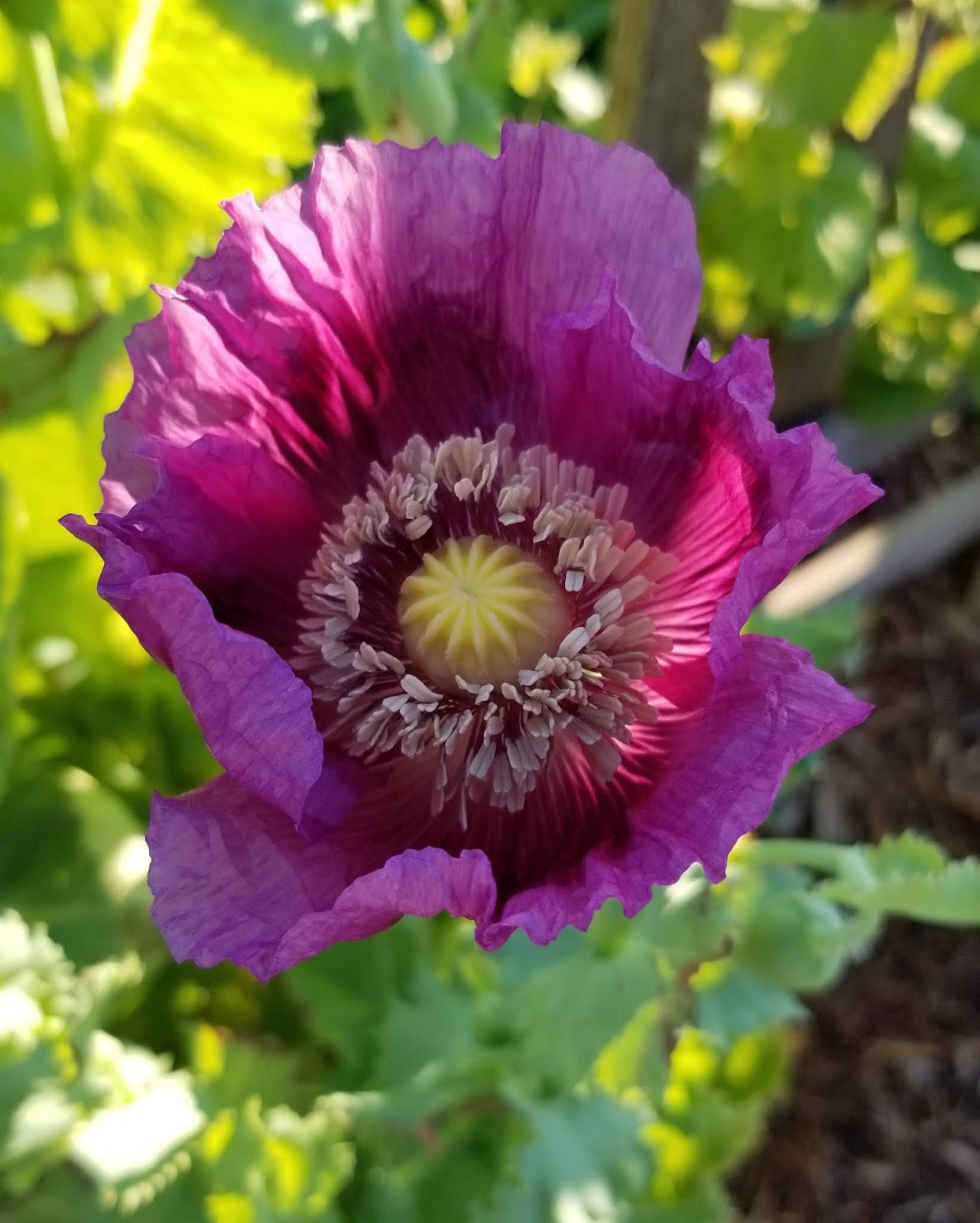
Want to see some pretty poppies?


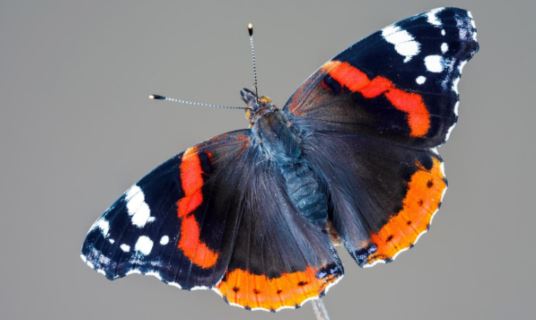
Here's something I just researched, because I didn't know what it was...a Red Admiral butterfly - Vanessa atalanta:


Sorry I couldn't give you a better picture, but they flit around so quickly and are disturbed so easily that I couldn't manage it.  Here's a picture from the Butterfly Conservation website:


I don't recall seeing this kind before, but I may have missed it, or, since they move so fast, I may just have assumed it was another painted lady.   I read they're migratory butterflies whose populations boom about every ten years, and that's when people tend to notice them.  The last boom was in 2010.  The first one of these I saw was on June 7, and then three days later there were dozens of them flitting about.  Just that one day.  So I guess they moved on toward their summer homes in the northern states.  Since then, I've seen only two or three solitary ones.

Again, another insect I haven't seen before.  I believe this is the white-marked tussock moth - Orgyia leucostigma.  The literature says they feed on trees, mainly oak, but can get blown by the wind to other plants on which they'll feed if they're stranded there.  This one was on my 'Grande Amore' rose.


Switching gears, I got another pea harvest. 

'Improved Maestro'

Peas and cheese.  And a boatload of butter.  Yum.


And I'm excited that it appears I'm going to get to eat more than one raspberry at a time.

'Glencoe'

My 'Mrs. Maxwell's Big Italian' tomato plants may be small - I only transplanted the little guys into the garden  May 17 - but the larger of the two already has a couple little fruits on it.  I did read that this variety is one of the earliest to produce.  My array of 'Missouri Pink Love Apple' plants are twice the size and still only have flowers.


The cucumbers also have lots of flowers, and I'm trying to keep a closer eye on them than I usually do, because I always seem to miss the first fruits, hidden in the leaves as they always are.


The onions in that same bed are eight to ten inches high now.

Being unseasonably cool lately, I found myself in the mood to dig out more of the wildflowers in my perennial bed project.  


I'm going to need that space in a few weeks to plant out my gaura seedlings.

Till next time...

'Poseidon'

August 28, 2017 0 comments By: m

The End of Summer

The total eclipse of the sun a week ago was a wonderful sight to see, and since then, the weather has been unusually mild. There's not much happening in the garden.


The damnable Japanese beetles are fewer, but still enough to keep me going out to pick them off the roses and okra at least twice a day.  The okra itself is still producing larger quantities than anyone wants at this point.  Enough is enough.  I'm letting many of the pods go to maturity in order to have seed for next year.

'Jing Orange'

I've pulled out tomato plants that were no longer doing very well, and that weren't producing tomatoes to care for in the first place:  'Black Beauty' and 'Gold Medal'.  The good ones - 'Missouri Pink Love Apple' - still have lots of tomatoes on them, but they don't seem to be ripening.  The same thing occurred at the beginning of the season, but I don't know if they still have time to ripen at this end of things if they don't get to it.

The cucumbers have been finished for about a week.  This one got stuck early on and I couldn't get it out so just left it.

I've been harvesting what little fall lettuce came up, and it looks like time to start considering a lima bean harvest, but I just haven't had the urge to do it.  I think it's all that okra I'm sick of that makes me not care about harvesting.  The peppers that I planted later than usual are now ripening.  Now, THOSE, I will get.  They're easy to pick and very tasty. The yellow mini bells are doing great.  They're thick-walled and juicy.  The last couple of years they've been so thin-walled that they weren't very good.  I don't know what variety they are because I plant seed from peppers I get in the produce section of the grocery store.

'Gold Medal' tomatoes and yellow mini bell peppers

Otherwise, things are coming to a halt, and I'm clearing them out as they do.  A few pictures then is all I have left to offer.

 'Gold Medal'  - pretty but pretty much tasteless


 Okra is still going strong


Still looks good from this view: peppers in foreground

'Cardinal' basil

tomato plants about to be pulled

Japanese beetles make a mess of my beautiful roses.  They especially like 'Pink Enchantment'.


Which means they generally leave 'Shazam!' alone.  Unless there are no pale pink blooms available.


'Shazam!' and lavender


These guys are showing up in numbers on the okra.  I had a feeling they're assassin bugs after Japenese beetles, so I've been leaving them alone.  Unfotunately, they're a relative that feeds on plants - leaf-footed bugs.  Fortunately, at this point, I don't care.  

The next flush of volunteer cilantro is coming up in the area where I pulled mature plants that had gone to seed several weeks ago.


The dahlias are still merrily pumping out blooms in the cut flower garden.


ornamental pepper


hyacinth bean vine

Hooray!  The creeping orange thyme has recovered.  I thought it was a goner during the heavy rains.  I really should move it to a higher spot, though.


See that rain gauge at the bottom of the picture?  It's catching Japanese beetles.  I use it to capture them from the plants.  The shape of it prevents them from escaping, and I realized that if I leave it uncovered, it will also attract others, acting like a trap.  Unfortunately, it doesn't attract them ALL.

I'm so happy to see that the butterfly milkweed I planted this year is not only lovely, but it's already doing what I hoped for: attracting and feeding Monarchs.  I counted eleven of the colorful caterpillars on the plants yesterday, which means they'll pupate here and hatch out....???....some time.


It's also attracting and feeding jillions of aphids.  I guess I'll just leave them alone.  I don't want to risk harming the Monarch caterpillars with anything I might do to rid it of aphids.  


The aphid colonies look like a treasure trove for lady bugs, but I haven't seen any feeding on them yet.

I was hoping that the Japanese beetles would be gone before the roses quit blooming, but I'm beginning to lose that hope.  I keep thinking of that advice I read in an online article a while back that said to just leave the beetles alone, because they'd be gone in a short while.  I've been battling them since the second week of June.  And if I hadn't been giving battle, I wouldn't have any rhubarb, okra, or roses left.  I don't know what they would have moved on to after that.  I guess the soybean field .

I have to cut the rose blooms and bring them in if I want to enjoy them.  Unfortunately, the two David Austin roses ('Charles Darwin' and 'Pat Austin') don't last more than a day once they're cut.  

'Pat Austin'

Thinking of my Texas friends in the devasting wake of Hurricane Harvey this week.