Showing posts with label squash. Show all posts
May 19, 2018 0 comments By: m

A little rain to soothe us


And some morning fog to start the day after too many days of unseasonable heat.

I got sick of handling the little six-packs of peppers and basils and decided to go ahead and plant them in the garden a little over a week ago.  I didn't have any grass clippings for mulch, but I did still have some bags of maple leaves I'd collected last fall, so I ran over them several times with the lawn mower until I had a wheelbarrow full of nice-sized pieces to perfectly mulch the newly planted beds.


After a lot of tedious work, I had planted and soaked down two beautifully and thickly mulched beds so that on these hot days the ground wouldn't dry out quickly, and any little weed seeds that sprouted would be smothered.  

Well done!

Until the following  day, that is, when a scirocco from the Sahara blew all day long.  This is what it left:


Better than nothing, I guess.

These beds had okra in them last year, and when I added a couple inches of compost to them, I left the old okra stubs and roots in the ground.  My idea was that I could easily plant peppers and basil in the spaces between the roots, and the roots would rot away, amending the soil.  It turns out to have the added benefit that it's something of a deterrence to moles going through under the surface.  This is a huge plus.  The little pests almost wrecked the lettuce patch this year.  It looked like they were having a party under there, and the plant roots were getting pushed up and losing contact with the soil, and then wilting.  I had to keep going out and tromping on them to get them back down.  Of course, tender little lettuce plants don't like to be trod upon.  

Finally, I have a red-stemmed rhubarb plant!  After only thirteen tries.  Here's the story:  I found it at Springwater nursery.  I had to pay $10 for it, too.  It better live.  The variety is 'Canada Red'.  


The potatoes I tossed into the compost pile are coming along.


The second round of lettuces is coming up between the first rows, and I've got more lettuce than I can handle, despite the moles.  I'll be giving away bags full. 


That freezing weather we had the first two weeks in April did a number on the pea germination, reducing it to about 20% of what I planted.  They're producing pods now, but I don't think there'll be enough for a harvest.  They will just have to be one of those things that I eat raw while I'm working in the garden.

I planted the lima beans on the 12th, figuring they'd be perfectly happy in this early heat, and they emerged four days later.  Normally, I would be planting limas after the peas had produced all they were going to and I pulled out the old plants, which last year was the first of June.  This year, they'll be in there together for a while.  That pathetic stand of peas certainly won't crowd the beans.

Left side of arc: 'Improved Maestro' bush peas; right side: Henderson's Bush lima beans

Speaking of beans, the runner beans I planted next to the cucumbers on the trellis are being attacked by something.  I sprayed them with neem oil, which is a natural, all-purpose insecticide, miticde and fungicide.  Since I've not seen what's eating on them, I'm hoping this will mitigate the damage.  It's not nearly enough to interfere with the plant growth (yet), but the reason I planted them there was to grow over the trellis and look pretty.  They're beginning to confirm my suspicion that this might just be a jumbled mess instead.  


Whoever is eating on the beans doesn't seem to be interested in the cucumbers.


This arrangement is definitely going to take some serious management and vine training.

I haven't had any luck with the melons I've tried before, but this French Charentais variety ('Savor') looked so good in the description that I had to try it. 


I've put three plants on the compost pile with no support, and three in the garden proper, which I caged beside the yellow zucchini.  (I had to buy the zucchini, as the year-old seeds I planted failed to germinate.)

I hate putting up the cages, because they detract from the beauty of the garden, but once the zucchini plants grow up into them, they get covered with foliage, and picking the fruits is easier than if they're on the ground.  Also, they don't seem to get so many squash bugs.  Here's hoping the melons will benefit from the cage as well.  It's going to be a little tricky to remove the fruits, though, since they're not going to fit through the cage wires (hopefully!).


The cabbage row is growing large, and somebody is already eating it.  I don't know for certain who it is, but since a likely culprit is cabbage worm, I'll need to start applying Dipel, which spoils the beauty when you use it in powder form, but that's all I have.  And the melon/zucchini cages have already spoiled the illusion that this isn't a vegetable garden.


The purple Zi Su (Perilla aka shiso) is a disappointment.  The description of the taste said it's a cross between mint and basil.  I guess that's a fair description.  But the leaves are kind of hairy, and I don't like that.  Maybe it doesn't like this terrible heat, because it always looks kind of droopy.  I won't be planting it again, but the Baker Creek description mentions using it for color to make pink rice.  I might try that.  In fact, the strange flavor might just be a good one for rice.

(That reminds me - sidetrack:  I put some peeled hard-boiled eggs (brown eggs) in the liquid from my pickled beets, and within a couple of days they were a beautiful dark magenta all the way through the white and a little way into the dark yellow yolk.  I should have taken a picture of the slice.  Very pretty.  Fairly tasty.  But then I put some in the liquid from a jar of Kalamata olives.  After three days they were a not particularly attractive color, but boy, did they taste delicious.)

OK.  Out of the vegetables and into the  cut flower and rose gardens.

This is not what I was expecting from the Gaura (also purchased from Springwater):


The foliage is gorgeous, and that flower color is amazing (until it fades to a pale pink), but I was expecting the flower to be borne on a tall stalk, swaying in the breeze.  Maybe this is just an artifact of the bizarre weather we're having and the first flower production of the season.  I'll find out with time.

You just can't beat this 'Sparkling Sapphire' baptisia (purchased last year from Helmi's) for show:


But you can match it with this pink lupine (grown from seed purchased from Baker Creek, overwintered from last year):


A watched pot never boils, nor does a watched flower ever blossom.  I've been tracking this giant allium for days.  It's pretty cool the way it's unfolding, though.


Check this out:  I collected marigold seed last fall from my plants that had done so well.  Since I had three or four different varieties, I tried to keep the seeds separate.  I figured it was a long shot they'd come true to the parent plants since they were all close together and expected at least some crossing.  What I didn't expect was that the cross would produce a plant that had two different varieties on the same stalk!


When I saw this, I thought I'd simply gotten two seedlings growing together that appeared as one, but those two flowers are branched off the same stem.  

I've seen trees and shrubs that have been grafted to have more than one variety of fruit or flower, but I've never heard of a plant doing this on its own.  In theory, at least as far as my education goes, those flowers should be similar to each other, if not to the parent plants, but for one to be completely like one parent and the other completely like another parent is something I've not heard of.  I'm eager to see what the continuing blooms look like.

Always something surprising when you're growing your own plants.  

Fingers crossed for more rain. And a little cooler days would also be nice.  This isn't July.

'Karl Rosenfeld' peony and dark purple bearded (German) Iris

July 24, 2016 0 comments By: m

Late July - What's Still Standing?

Tomatoes and okra.  Nature's compensation for Missouri's brutally hot summers.  The perfect meal.  Add a little cottage cheese, or turn that tomato into a sandwich with crispy bacon and mayonnaise...and Bob's your uncle!

I'll talk more about those later, but today I want to talk about what's gone belly up that I would have expected to still be harvesting.

I planted lots of onions this year because last year's crop didn't last me through the winter.  I planted red, white and yellow onions, and I staggered the planting dates from the end of March when the ground was workable through mid-May. Unfortunately, I made the mistake of planting them at the edges of most of my plots where I, the cat, and other night-loving critters trampled a lot of them getting to the sweet stuff.

Then it rained and rained and rained.  I like not having to water the garden, but I prefer having to water it to having it drown.  From the 18th of April through to today, I've had more than 20 inches in my rain gauge, and on the morning of the 6th of July it was completely full at 5-1/2 inches, so I don't know how much more rain we actually got that night, but a nearby town was reporting 9 inches!  Actually, it's a good thing we've gotten the rains we have, because since the first of June, it's been blisteringly hot.

The point is, I had to pull 99.9% of my onions because after that heavy rain, the ground was so saturated, they were starting to rot.  The later plantings had not gotten very large, but those will be good for roasts (which I never make!).


The first year, I didn't plant any onions, since I really can't tell the difference in the taste of fresh home grown ones and those you buy at the grocery, and they take storage space, not to mention garden space, which I had totally used up in trying oddball things and three to four varieties of everything.  (Over-ambitious first time garden syndrome.)

The second year, I planted white, yellow, red, and cipolini, a variety I saw at Morgan County Seeds, which is yellow and flattened, rather than round, but I didn't have much luck with it.  


When I harvested my onions, I hung them to dry on a coat rack in the shade.


I also planted shallots that year (the reddish gold bulbs in the picture are shallots), and had a wonderful harvest of large, tasty bulbs.  I planted some this year, but not one came up.  I read somewhere recently that the best bulbs to plant for onions are the smaller ones.  No reason was given, but the shallots I planted this year were huge.  Maybe that was the problem.  I should have used them for cooking.

I harvested onions last year from the second week in June through the third week in July when heavy rains forced me to get them out of the ground.

This year, I had too many onions for a coat rack, so I set up a tomato cage and hung them there.  I'll soon be taking them down and storing them.  I thought the cellar would be a good place, but I think it's too humid right now.  What do I know?  Little or nothing about everything, as an old San Francisco friend of mine used to say.


But, I've gone from no onions to lots of onions in the garden.  I love the onions.  I like to pull up a big fat bulb, I like to watch them dry, and I like to smell the bruised tops when I'm gardening and not paying attention to where I'm stepping.

I also have a crop of Egyptian walking onions from a few bulbs I got at Powell Gardens in Kansas City.  I dug the whole thing up this year and replanted from bulbs.  It was getting out of hand.  A friend said she calls those type bunch onions.  The greens of these are very large and mild, but they don't make much of a bulb - it's more of a swollen base.  The bulbs you plant are produced from the flowers at the top of the plant.  They come up on their own in the spring, and so I use the greens while they're small and the only onion in the garden.


Okay, I focused a little too much on the onions.

What the heck happened to my cucumbers?  They are all but dead.  I've seen some squash bugs on them, but I don't think that's what's killing them.  They may be speeding up the demise, though.  I'm guessing it was too wet or too hot, or a combination one-two punch.  Most of them died on the vine.  I'm going to pull the plants out this week if they don't shape up.  Probably tomorrow.


I took that picture the first week of June when they were still looking like they might pull through.  This is what they looked like last year on the last day of June (same variety: Marketmore):


At one point this year, there was so much water in the soil and in the air that heavy guttation was quite visible.  Crying cucumber vines.  


The squash I planted this year was a substitute for the one I really wanted because I didn't order seed in time and purchased some at Morgan County Seeds where they didn't have the Golden Zucchini. I bought something I thought would be close: Gold Rush.  I was harvesting Golden Zucchini into August the first year of my garden, and late July the next year.  I don't remember much except the abundance of squash bugs the first year.

This year, I had something go terribly wrong, as individual leaves started dying off (which happened the previous year, if I remember correctly), and then entire plants overnight.  I pulled up the last one a few days ago.  It's been so hot I couldn't work up the energy to care enough to investigate, but also because the fruits weren't nearly as pretty as Golden Zucchini.  I hope the problem was a vine borer and not a soil fungus.  Perhaps next year the heat won't be so Satanic, and I'll do better.

Golden Zucchini

And, lastly, my beets seem to be done.

I have a gardening friend who's been doing it successfully for years, and she says she plants her beets in May.  University of Missouri Extension has a vegetable planting calendar that tells us to plant beets from March 15 - April 15 in central Missouri (north is a bit later while overlapping, and south is earlier, such is the difference in climate), and then again August 1, which I think I'm going to do this year.


(Before I get into my experience with beets, I'm going to disagree with the MU Extension people on this guide.  Golden Detroit beets do bleed, it's just that their color is not so intense as red beets.)

Anyway, here's what I've done with beets so far:

I love beet greens.  They're better than spinach because they're sturdier, and better than other sturdy greens like mustard greens because they're mild and sweeter.  I planted them in my first garden with the idea that I didn't even care if I got beet roots to eat as long as I had greens.  It was very cool and wet that first year, and what I think was cercospera - or at least it was some leaf spot disease - took them as soon as they got big enough to eat.

I had planted  one golden variety: Golden.  Who knows why they named it that, eh?  And three red ones:  Bull's Blood, Detroit, and Cylindra.  I got them all from Baker Creek Seeds.  The Golden variety didn't succumb to the leaf spot like the red ones did, and I got some decent roots from all of them, despite the blighted leaves and insect feeding.  It was a boon year for grasshoppers.


Last year, I decided to try more varieties.  Keeping the Golden that I'd had good luck with, I grew the following red varieties:  Boltardy (supposedly, it doesn't bolt as readily, but none of mine bolted last year before I'd harvested them so I don't know why I thought that would be a good idea), Red Ace, Detroit Red, Detroit Dark Red, and Cylindra.

I planted mid-March.  Cylindra didn't even come up.  The cool, wet weather we had that year didn't come until mid-April, and it lasted for about a week.   Detroit Red had heavy leaf spot, so much that I cut it back to the ground the end of April to reduce the innoculum that could spread.  I tried a second planting of Golden and Red Ace at the end of June, but the germination was very poor.

At any rate, I managed to get some harvest from mid May to the end of June.  So, I wouldn't maybe think I should be harvesting anything this late this year otherwise, but, I'd noticed that the red beets seemed to be more likely to get the leaf spot, and I figured this year I'd plant them a couple of weeks later than the yellow beets to try to avoid the cool, wet weather.  I planted Golden on April 23, and Detroit May 7. Everything looked great for a little while, but the insects eventually set in on the yellow beets (they like that sweet green, too, I guess), and my red beets are still just sitting there.  The tops are large, but I've harvested all of four beets.  The rest are just tiny roots.  I'm beginning to think they'll perform differently each year depending upon the weather.  

Golden, June 1, 2016

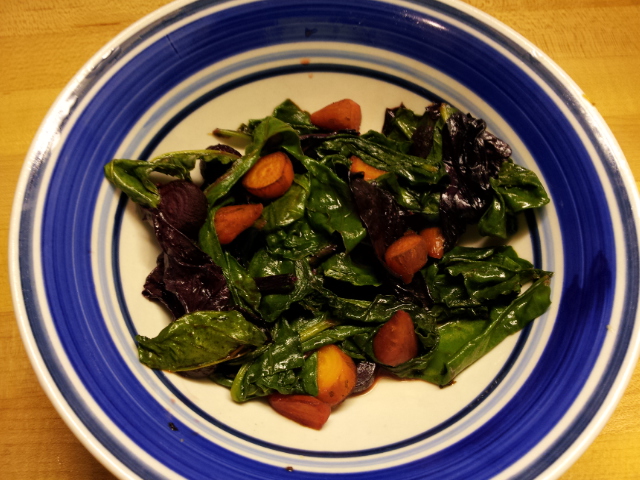
My daughter-in-law taught me how to roast beets by smearing them with oil, wrapping them in foil, and putting them in the oven.  Lawsy, Miss Scarlet, are they ever tasty.  I also cooked the baby ones by slicing and sauteing them and then throwing in the green tops.  Heavenly.


I canned a few golden ones as sweet & sour beets.  That's good, too.

Are you a beet lover?  Do you grow onions?  How do you harvest and store these veggies?

Till next time.
July 22, 2016 0 comments By: m

Favorites and Rejects: Part 2 - Favorites

I feel like I should keep trying different varieties, because there might be something better out there than the ones I know I like.  I'm having the same dilemma that I have at restaurants:  I feel like I should try an alternate option than the one I had before, but I know I like that.

In the tomato world, I do keep trying different varieties.  I think the reason I'm able to do that with tomatoes is that I plan on always planting at least four varieties, for...er...variety.  So my current favorites are only that - current.  They could easily change.

Having said that, I've already been planting Golden Jubilee since the first year, and it would take something truly spectacular to knock that off my favorites list.  It's a yellow tomato that's very flavorful and neither too tart nor too sweet for my taste.

Another tomato that I just planted this year immediately making my list is Missouri Pink Love Apple.  When it starts to ripen, it does indeed look pink.  Once it gets very ripe, it looks red, but it's not that deep red of red tomatoes.  It's delicious.


I should add here that when I started growing tomatoes, I read some articles with tips for growing, harvesting and storing, where I learned that for heirloom tomatoes, you should not wait until they look completely colored on the vine to pick them, but once they're somewhat colored up, you should feel them, and when they start to give to a little pressure, they're ripe.  If you wait until they're fully colored, they're overripe.  When I pick them, I usually let them sit for a day or two which colors them up.  I could probably just leave them on the vine a day or two longer, but the first year, when I did that, I found that some critter would usually decide the night before I wanted to pick them that they were indeed perfectly ripe and take a few bites out of them.  Someone told me that was how her father told her you'd know when your tomatoes are ripe: the raccoons will eat them.

I'm currently also testing Old Italian and Brave General, two red varieties.  I'll have to get back to you on those.

The first year, I planted Golden Zucchini with seeds I got from Baker Creek Seeds.  The plants were huge, and the fruits were delicious.  I picked them small and used a vegetable peeler to slice them up over plates of spaghetti and topped it all with parmesan cheese.  That was good.  I also sliced them that way into green salads.  Good as well.  Sauteed with onion - mmmmmm.

The fruits and flowers were a beautiful, dark, golden yellow color.  The squash bugs liked them a lot, too.  Periodically, I would go out and lift leaves from the ground and stomp hundreds of little babies.  I know.  Cold blooded.  But squash bugs are as fecund as aphids.  You can't just let them go, or you'll be overrun.


At first, I thought the yellow leaves were a sign of a nutritional problem, but they seemed quite healthy, and after reading a comment on the Baker Creek Seeds site, I guess some of them will just be that color.  Some leaves were a solid, bright green and some of them were silvery with green splotches.  Or maybe that's green with silvery splotches.  It's a very interesting looking plant.  And did I mention it gets huge?


I saw another comment at Baker Creek Seeds from someone saying he grew these in tomato cages.  I might try that.  It would limit their sprawling into my garden pathways.  I failed to order seeds this year and ended up buying a similar squash called Gold Rush at Morgan County Seeds, an Amish store about an hour south of me.  The plants were vigorous, and the leaves were a darker green and the fruit was a paler yellow than Golden Zucchini.  Alas, more of it rotted and died while small than stayed healthy long enough to harvest.  Then the plants started dying off.  It was either too wet this year, or I've got a soil fungus in that plot.  I really hope not.  I guess it could have been the bugs, but there weren't yet very many of them - maybe squash vine borers that I didn't see.  I just pulled out the last plant a couple of days ago.  I'll have to investigate more closely if it happens next year.  They were gorgeous for a while.


The fruits weren't as pretty as Golden Zucchini, so next year I'm going back to that.

I didn't plant any cowpeas (black-eyed peas) this year because I ran out of space, but I did plant them in 2015.  The flavor was similar with all three varieties I planted, but I have to warn you that the black beans bleed, so if you grow them, rinse them very well in  hot water or cook them separately from any others or you'll end up with a gray and very unappetizing dish.  It will taste good if you can manage to bring yourself to put it in your mouth, but you might not want to serve it to company.  A neighbor told me to cook them with onion and bacon, and boy was that ever delicious.  The three varieties I grew were California Blackeye, Pinkeye, and Black Crowder (the black one).


I've planted a few varieties of okra, and my favorites are the red because their leaves are a deep dark green and the stems and fruits are a dark red.  They do turn green when you cook them, sadly, but that's really not a problem since they don't sit around on the plate very long in this house.  

The first year, I  planted Jing Orange (a red variety), Midget Cowhorn and Clemson  Spineless.  The Jing Orange was pretty, but none of them was otherwise outstanding.

The second year, I tried three red varieties, having decided I didn't need to bother with the green: Burgundy, Bowling Red and Red Velvet.  Burgundy had very poor germination, and I marked it off my list.  This year, I didn't order my seed and instead bought it at Morgan County Seeds, and the only red they had was Burgundy.  I bought it and planted it more densely - which was very dense indeed - and if it didn't have 100% germination, it was very close.  So - who knows?  The seed?  The weather?  At any rate, it's all good.  I think any of the reds I've tried would be okay.


I planted some peas the first year, and none of them did anything. For one thing, I didn't have a garden spot for them, I just planted some on a couple of trellises at the edges.  One trellis was under a building eave, and the rain that poured off that drowned anything there.  I don't know what the problem was with the other, but I have a neighbor who said her peas did nothing that year, too.

The following year, I decided to try a little harder on the peas and put up a garden net between two bamboo poles for them to grow on.  I planted Sugar Snap and Wando, which were peas I'd bought the year before and had left over, so that probably wasn't very smart.  Make extra work to plant seeds that might not be any good.


They all did germinate and grow, though, and I crossed Wando off my list, but didn't indicate why.  I think it was because the Sugar Snap were so sweet and tasty in comparison, but I really can't recall.

This year, I had a great idea for my peas that didn't exactly work out.  I'd left the old okra stalks in the ground all winter just for something to look at.  A few of them were over ten feet tall.  They seemed sturdy, but I didn't know how heavy lush pea vines might get.  Still, I thought it was a worth a try to plant them amongst those stalks.  And I planted very, very densely.


This time, I planted Sugar Snap and Green Arrow, a bushier type, which had long pods filled with up to ten peas.  Green Arrow, being a bushier type plant, held itself up a little better, but Sugar Snap just wallowed on the ground.  Wimps.  The peas I got from both varieties were good, Sugar Snap being much sweeter, but I had to dig for them, because the plants climbed all over themselves and reached no higher than my knees.  It might have been a successful experiment had it not been for the heavy rains we had and the fact that the cat kept using the dry okra stalks for scratching posts and shredded them.  For next year, I have another idea.

I plant some chili and jalapeno peppers each year.  They've always been okay, but my favorite peppers are the mini bells that I call snackers.  You can buy them in the grocery stores, but they're better fresh, of course.  I don't bother looking for packaged seeds; I just scrape the ones out of the peppers in the store.  Turns out you can plant them immediately or dry and store them.  Either way works.

One last mention:

Tatsoi - wonderful salad green.  I tried this for the first time this year - in fact, I'd not heard of it before.  I purchased the seed at Morgan County.  It's an excellent salad green, but I most often just grazed on it directly out of the garden while I was working.  A little bunch of baby leaves wrapped with an arugula leaf is soooo tasty; juicy broccoli-like taste with a peppery coating.  This is it on the right getting ready to bolt:


What are your favorite varieties to plant, and why?

May you always have happy gardening and good eats.