Showing posts with label wildflowers. Show all posts
May 07, 2023 0 comments By: m

Oh how I wish it would rain

The weather forecast keeps teasing rain, and it never happens.  Plants I've grown from seed are ready to go in the ground, so they have. And I've been forced to do a lot of watering.

We went from a very cool April (with some unfortunate freezing) to a very hot May - temperatures in the upper 80s.  Such is gardening in Missouri.  Maybe everywhere nowadays.


Lettuces I sowed earlier are coming up sporadically and sparsely.

Peas ('Kelvedon Wonder' and 'Lillian's Caseload') are up and coming along nicely, and the 'Calima' bush green beans I planted next to them are just now coming out of the ground.  The straw paths I made this year were apparently much more loosely baled than the bales I used last year, and these are just falling apart and blowing everywhere.  


Transplanted wasabi radishes are looking okay.  But I don't know how they're supposed to look.  I planted them once before and didn't get anything useful from them.  If they don't produce anything of use this year, I won't be trying again.


'Seaside' spinach - my first go at this - looks good.  It looks good to the rabbits, too.  It has a mild taste and a sturdy leaf.


That snap freeze we had got my potatoes, but they've come out of it and don't seem to be any worse for the wear.  This year I'm growing 'Yukon Gold', which I've grown before and know to be delicious, and 'All Blue', a purple variety. The picture below is 'All Blue'.


Hoping to get my small bed at the edge of the wildflower garden fleshed out, I purchased some small plants from the Missouri Wildflowers Nursery in Jefferson City.


The bed looks over the rest of the garden between the wildflower garden and a cut flower plot and the roses.  I envision it as a lovely place to sit and gaze some day.  Except it's awfully hot in the summer when everything is in full bloom, so I probably won't be doing any long term sitting.


Honeybees were out early this year, and they seem to appreciate the shallow water dish where they can sit at the edge and drink.


And it's apparently baby bunny season.


'English Charm' iris is supposed to be double-blooming, but this is the third year it's bloomed, and it's only been once in the spring; nothing in the fall.  At least it's charming that once.

'English Charm'

'English Charm'

The same is true for 'Victoria Falls'.


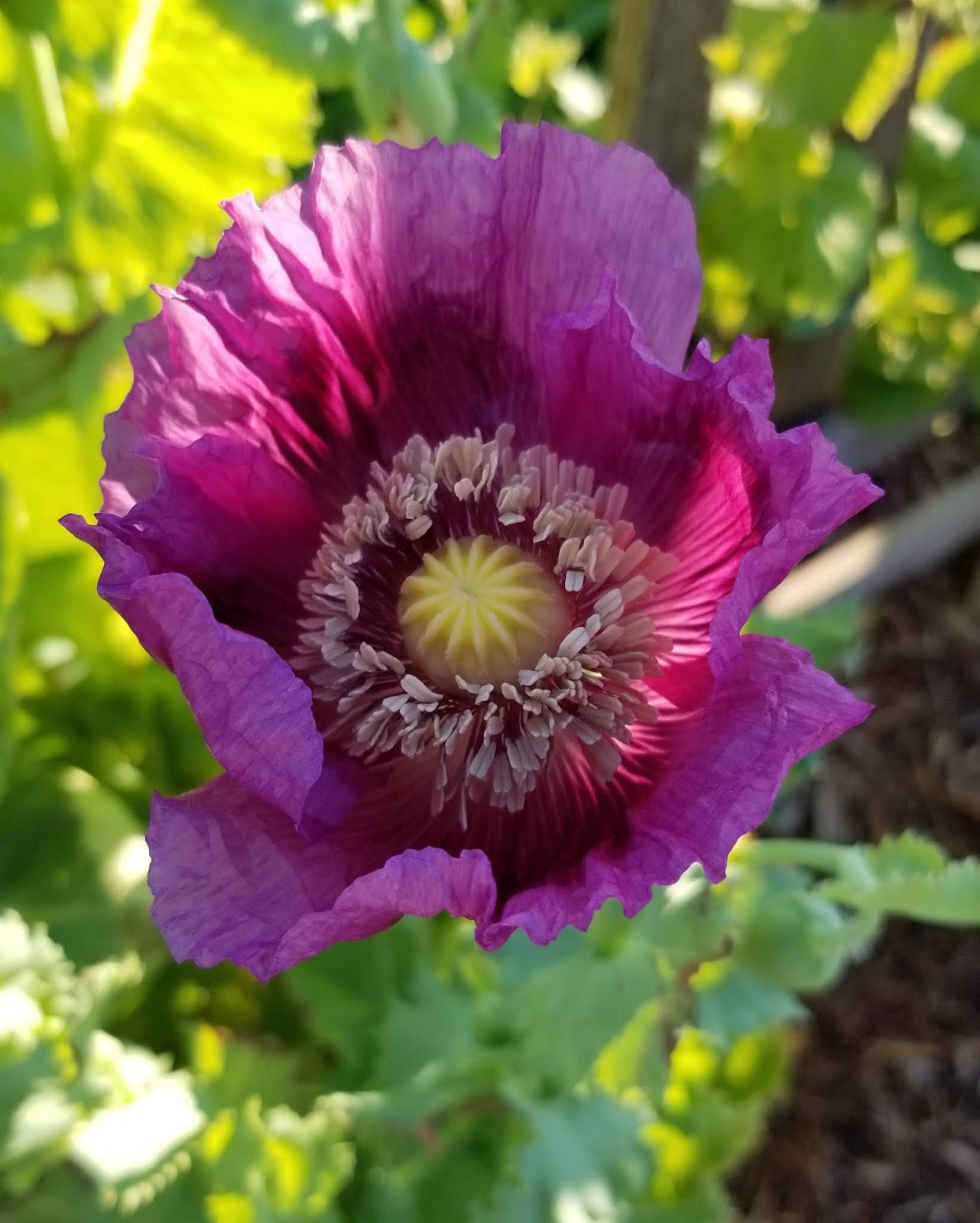
The oriental poppies have tons of buds this year.  


I revamped the pet cemetery, and hope I can keep it going until the rains come - if they come at all this year.  Chances are not looking good.  


Speaking of not looking good...yikes!  My 'Phenomenal' lavender died way back this year.  I don't know if it simply ran its normal life course or if the dry winter did it in.  I'm trying to nurse what's left long enough to get some of the living branches to root on their own.
 

I have no idea what name this iris has, but it looks a lot like 'Mother Earth'.


Until next time...rain dances welcome! 

March 17, 2021 0 comments By: m

The lost post

I see I set up images for a post last August and didn't get it finished. So, out of place, here it is without a lot of explanation.

Aztec zinnias

late tomato harvest ripening under cover - 'German Johnson' variety

too-late-planted cabbages (didn't get large enough to harvest)

perennial garden in full glory

I wish I could remember what this is:


It has pretty red stems, whatever it is.  It looks like zinnia leaves, but it might be a weed!

Monarch butterfly larva

ground cherries

I planted ground cherries thinking I'd make some jam from them, but it turns out they're like tomatoes, and once you boil them down, all you're left with is gajillions of seeds.


I don't know the name of this little black bee.  We'll call her Shirley.


Top: 'Yellow Butterflies' mullein;
Bottom: 'Cardinal' basil

The perennial garden was lovely...


It was the first time I planted tall verbena (Verbena bonariensis), and I absolutely love it.  Especially interplanted with the Russian sage (Perovskia).  It's not truly a perennial in this zone, but I hope it reseeds itself.  It may not, so I'm starting more seed indoors in March in case it doesn't.

dark purple = verbena; light purple = Russian sage

The old mimosa tree at the west end of the garden lost a couple of limbs in the winter storms, and  I think you can see why...


The August garden before a rain:

June 14, 2019 0 comments By: m

This and That

From time to time, I end up with pictures that didn't fit in the latest posts and will probably be outdated by the time I publish another.  That's happening now, so this post is really to just empty my photo gallery.

Some of the wildflowers are now starting to blossom, but the Queen Anne's Lace (wild carrot - Daucus carota) has been blooming for about two weeks.  Some have a black dot in their centers - actually just off center - which at first I always think is an insect, but it's actually a separate flower (that's probably better described as dark purple).  I haven't found much inforation about them, but according to several sites, those single dark flowers are infertile.  

The plant was named after England's Queen Anne (which one seems to be a point of disagreement), "an expert lace maker," and there is a legend that says she pricked her finger with a needle, whereupon a single drop of blood fell onto the lace she was making; thus the dark purple floret.   Sweet, but why the heck is it really there?


Queen Annes are lovely, but each of the little white flowers,  unlike the single dark one, IS fertile, and they self-seed at amazing rates.  The Carrot Museum website says: " Each compound umbel consists of 20-90 umbellets, and each umbellet has 15-60 flowers."  (Umbel is the type of form the flower takes - kind of like an umbrella.) That's a lot of seed.  This may be great from the flower's point of view, but from mine, it's definitely a drawback.  They invade every corner of the garden.  The seeds have bajillions of little hairs that make them stick to your clothing if you so much as breathe in their direction, so if you wander into a patch when they're producing seed, you'll be picking the little buggers off you one by one.  I find myself pulling scores of Queen Anne's lace by the roots every year, trying to get them out before they go to seed.  Don't worry, I couldn't possibly get them all.

The Carrot Museum says no one knows what that little dark flower is for.  But I rather like the idea presented by some botanists that it's there to trick other insects into thinking there's another insect feeding on the plant, so it must be desirable.  Sort of like a barker.  So far, research data has not provided evidence this works.  Maybe it's there to puzzle us.

I find plant propagation so interesting, and whatever their mechanism for getting pollinated and reproduced, it's a good trick.  They can't get up and walk away.

Speaking of reproduction, I just noticed the seed pod of a pansy.  I've often seen seed pods of the pansy cousin, violet, but I don't think I've seen them until after the seeds have all been expelled.


Cute, huh?

Want to see some pretty poppies?


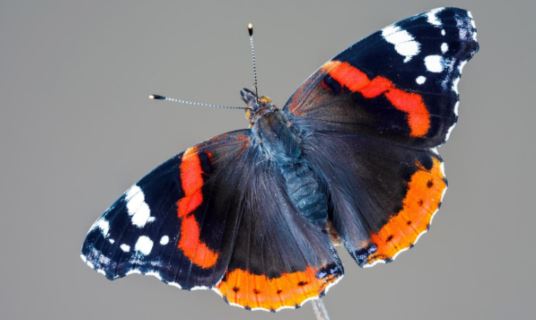
Here's something I just researched, because I didn't know what it was...a Red Admiral butterfly - Vanessa atalanta:


Sorry I couldn't give you a better picture, but they flit around so quickly and are disturbed so easily that I couldn't manage it.  Here's a picture from the Butterfly Conservation website:


I don't recall seeing this kind before, but I may have missed it, or, since they move so fast, I may just have assumed it was another painted lady.   I read they're migratory butterflies whose populations boom about every ten years, and that's when people tend to notice them.  The last boom was in 2010.  The first one of these I saw was on June 7, and then three days later there were dozens of them flitting about.  Just that one day.  So I guess they moved on toward their summer homes in the northern states.  Since then, I've seen only two or three solitary ones.

Again, another insect I haven't seen before.  I believe this is the white-marked tussock moth - Orgyia leucostigma.  The literature says they feed on trees, mainly oak, but can get blown by the wind to other plants on which they'll feed if they're stranded there.  This one was on my 'Grande Amore' rose.


Switching gears, I got another pea harvest. 

'Improved Maestro'

Peas and cheese.  And a boatload of butter.  Yum.


And I'm excited that it appears I'm going to get to eat more than one raspberry at a time.

'Glencoe'

My 'Mrs. Maxwell's Big Italian' tomato plants may be small - I only transplanted the little guys into the garden  May 17 - but the larger of the two already has a couple little fruits on it.  I did read that this variety is one of the earliest to produce.  My array of 'Missouri Pink Love Apple' plants are twice the size and still only have flowers.


The cucumbers also have lots of flowers, and I'm trying to keep a closer eye on them than I usually do, because I always seem to miss the first fruits, hidden in the leaves as they always are.


The onions in that same bed are eight to ten inches high now.

Being unseasonably cool lately, I found myself in the mood to dig out more of the wildflowers in my perennial bed project.  


I'm going to need that space in a few weeks to plant out my gaura seedlings.

Till next time...

'Poseidon'